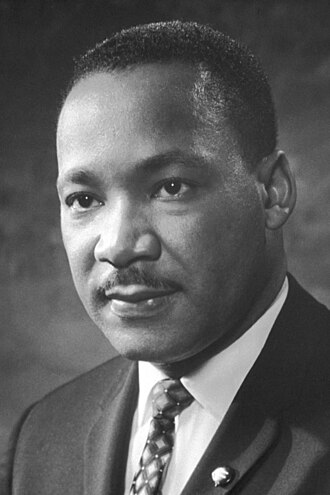
Martin Luther King Jr.
Civil Rights Leader
1929–1968 · United States
Made nonviolent direct action a central force in the U.S. civil-rights movement and linked racial justice to economic and human rights.
The Full Profile
Martin Luther King Jr., Civil Rights Leader, made nonviolent direct action a central force in the U.S. civil-rights movement and linked racial justice to economic and human rights. Martin Luther King Jr. was a Baptist minister and major leader of the U.S. civil-rights movement. He helped lead campaigns in Montgomery, Birmingham, Selma, and beyond, using nonviolent mass action to challenge segregation and disenfranchisement. In his later years he increasingly addressed poverty, labor rights, and war as interconnected moral issues. From Montgomery to Memphis he led the campaigns that produced the Civil Rights Act and the Voting Rights Act, and at thirty-five became the youngest Nobel Peace laureate of his era; his final campaign — against poverty and war — remains unfinished business.